

If the default indie hero story is still “guard the dream title to the finish line, grow it forever, ship someday,” then the numbers STFGames (posting as u/StationPhysical6910 on r/IndieDev) put on the table between 2025 and 2026 nearly smash that script in public: a five-year action RPG shelved; the math saying at least four more years; a volunteer team that once peaked near thirty; and what actually reached Steam was a title blunt enough to feel like a dare—*Stone Simulator – Just Be a Rock*.
It sounds like a joke. What carries weight is that they cashed the joke into an auditable ledger—early peak concurrent around the low thirties; after viral visibility, concurrent still often stuck at about fifteen to twenty-five; a price cut from $4.99 to $2.99 that nearly matched profit and came out slightly lower; then co-op that let people be rocks together, lifting peak concurrent from roughly seventeen to roughly three hundred eighty. Steam Charts records an all-time peak of about 378, pinned to the October–November 2025 spike.
The through-image of this piece is the universe on the shelf set against a stone that cannot move. One is the world, combat, and story piled up across five years; the other is the only verb the player is allowed: exist. The real cruelty of independent production is often not technical—it is whether you will admit that the universe can wait on the shelf, while the stone must ship first.
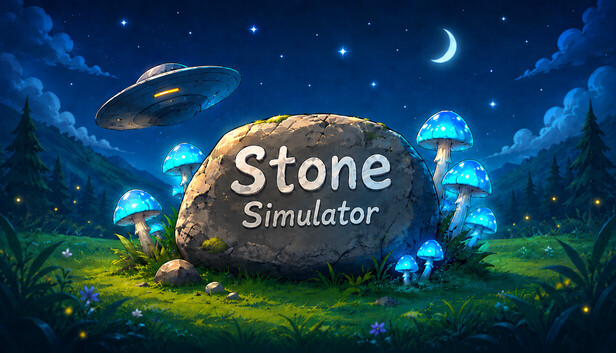
1. Default Logic: The Dream Must Be Finished—or at Least Made Large
Industry default logic is clean, and therefore wounding.
Once an action RPG is named “the dream project,” teams open a familiar menu: the world must be big enough, combat epic enough, narrative deep enough, cast large enough. Players learn the same vocabulary—grind, vision, finally shipped. That pact makes “go big” forgivable industry grammar, and makes “ship something small first” sound like betrayal.
STFGames’ public postmortem refuses that shortcut. The author is blunt: it was their dream—a massive RPG, deep story, epic combat; five years; a team; a whole world designed. Then reality hit: people left, scope crept, progress slowed. On DTF, Alexandr Frangov is more concrete: at peak the enthusiast team reached about thirty people; newcomers arrived, veterans vanished, some stopped answering—enthusiasm suits short sprints, not marathons with the same roster. The math said: at least four more years. So the project was frozen, shelved, waiting for enough material and immaterial resources to return.
This is where default logic and production ethics fork. Default asks what the dream still lacks. Honesty asks whether, at current staffing and pace, the game will live forever inside the sentence “four more years.”
2. Smallest Shippable: Shrink the Universe to a Stone
After the shelf, the harshest question is not “do we still love that RPG,” but “can we still ship *anything* on Steam.”
The DTF piece writes the criteria with cold clarity: the game must ship in a month; everything else grows from that—no extra hires, simple gameplay, fantasy held in check. So the stone appears: be a rock, watch seasons, philosophize about life. The February 2025 ModDB brief lists features like a joke checklist: being a stone, watching seasons change, philosophizing. The Steam page nails it harder: Be a stone / rock / boulder. Do nothing. Just exist.—meditative idle, absurd achievements, seasons and weather, and later online co-op.
Scenes can be more concrete. The Steam page went live on 8 February 2025; review bounced them three times—language switching must be available in-game at any time, UE redistributables must ship DirectX/VC++, and even without AI you must answer the AI questionnaire carefully. Day-one wishlists were about nine, five from friends. Then a Japanese journalist put the news on a million-traffic portal; in under two days wishlists hit about two thousand, roughly eighty-five percent from Japan. The author admits luck—or that stereotype Japan really eats the strange—but numbers are numbers; after the wave, organic daily wishlists from other countries sat around thirty. What must be crushed here is not “cute meme product,” but the shame that only a dream RPG deserves a store page. In the IndieDev postmortem, shame is almost the lead: the stone simulator they were nearly ashamed to make was the thing that worked.

3. Numbers Pin the Rhetoric: Concurrent, Price Wall, and Being Still Together
Without concurrent and price, the stone story slides into fluff. The public postmortem pins rhetoric to checkable ground.
Early Access launched about 2 March 2025 at $4.99; early peak concurrent about thirty-two. Seasons, events, and a year cycle carried EA to 1.0—full release about 19 August 2025. Viral visibility arrived; concurrent still often sat at about fifteen to twenty-five: exposure is not presence. Cutting $4.99 to $2.99 nearly hit the same profit wall, slightly lower—the wall was not the sticker, but the other side of “will anyone pay for this stone, and for how long.”
Then co-op. Let people be rocks together—peak concurrent from roughly seventeen to roughly three hundred eighty. Steam Charts independently logs an all-time peak near 378 (October 2025 peak 378, November 363). Creative Bloq reported in late October 2025: up to four players, private or public lobbies, even teleport with E to change resting spots; ten teleports unlock an achievement—social life compressed into a stone changing seats. Observation only (not played here): co-op did not turn the game into an action title; it admitted a plainer fact—stillness can be shared.
Reviews are honest to the point of absurdity. One-star and five-star alike include the same line: “It’s literally just a stone.” As of 19 October 2026, Steam shows Very Positive overall—about 94% of roughly 1,564 reviews. Without a playthrough, that line reads as a systems manifesto: the game delivered the minimalism it promised; praise and mockery share one description.
4. Backflow: The Stone Found an Audience; the Next Game Does Not Inherit It Automatically
The most interesting coda is not the peak of three hundred eighty—it is the next problem.
The follow-up post is cold: Stone Simulator found an audience; the next game, SOMNIUS, got fourteen wishlists in its first twenty-four hours, eight from friends. A meme audience does not transfer automatically. That nearly rewrites where a hit micro-game sits in the indie chain—it is not an auto-funnel; it is closed-loop shipping practice: you learned store pages, review, pricing, co-op, reading charts; you did not automatically inherit players for the next narrative game.
For independents, that backflow is sharp and useful. You may not have a five-year RPG wreck, but you have your own “four more years” list: a combat system, a big map, endings that must all ship. The stone on Steam forces the audit: smallest shippable is not humiliation of the dream—it is an audit of staffing, math, and shame. Capcom talks rebuild on handhelds; STFGames talks shrinking to a stone on the shelf—both ask what the minimum non-negotiable set of the experience is. The stone’s answer is harsh enough to leave only “exist” and “share stillness.”
Closing: Independence, Redefined by Shipping First
Put this postmortem back into the 2025–2026 indie floor, and what it hits is not the reputation of “meme simulator,” but a quieter production laziness—assuming only the dream project deserves to ship, that exposure becomes concurrent, that a price cut breaks the profit wall, that finding an audience rents the whole genre pipeline.
STFGames’ counterexample is clumsy and expensive: five years on the shelf, a one-month criterion, three Steam review returns, Japan traffic luck, a failed price experiment, co-op lifting the peak by an order of magnitude, next-game wishlists nearly flat. Clumsy because it cannot be romanticized; expensive because it spends real self-admission, not only asset pipelines.
So “independent” can be redefined here. Independent need not mean guarding an unfinished universe; it can mean, when the math says four more years, still asking what can ship honestly in four weeks. Production need not mean feature stacking; it can mean writing shame into the title—*Just Be a Rock*—then checking, concurrent by concurrent and review by review, whether that sentence lied.
Executable tips, short and unkindly honest:
- Write down your “four more years” math: at current staffing and weekly pace, how long until the dream ships; numbers before slogans.
- Open a separate “four-week shippable” list: gameplay, assets, review traps, price; fantasy gets a veto.
- Book exposure and presence separately—wishlists, clicks, and tweets are not peak concurrent; whether co-op works is audited by presence numbers.
- Put hit audiences in a “non-transferable” column: measure day-one wishlists on the next title alone; do not assume the meme pipe moves house.
The stone is still lying on Steam. Whether the universe on the shelf returns, the authors have not written as a promise. Until then, production already stated the audit standard: not how large the dream is, but whether a stone has already existed, honestly.
Xiaoguang

Sources and further reading
u/StationPhysical6910, r/IndieDev postmortem (2026-06-04): I spent years on my dream action-RPG…
Follow-up: Stone Simulator found an audience…
stfgamedev, ModDB (2025-02-26): Spent 5 years making an Action/RPG…
Alexandr Frangov, DTF (2025-02-14): Через тернии к… симулятору камня?
Steam store: Stone Simulator – Just Be a Rock
Steam Charts (all-time peak ~378): steamcharts.com/app/1425980
Joe Foley, Creative Bloq (2025-10-28): UE5 stone simulator goes multiplayer