

If the Pokémon secondary market spent the past few years treating “heat” as one river—unboxing clips for new expansions, auction headlines, PSA 10 screenshots flooding the same emotional pool—then by mid-October 2026 the riverbed was visible. Water still moved, but the channel had split into two courses that no longer join. On one side: paper that can never be printed again. On the other: paper still in print, being reprinted, or about to be overshadowed by the next wave.
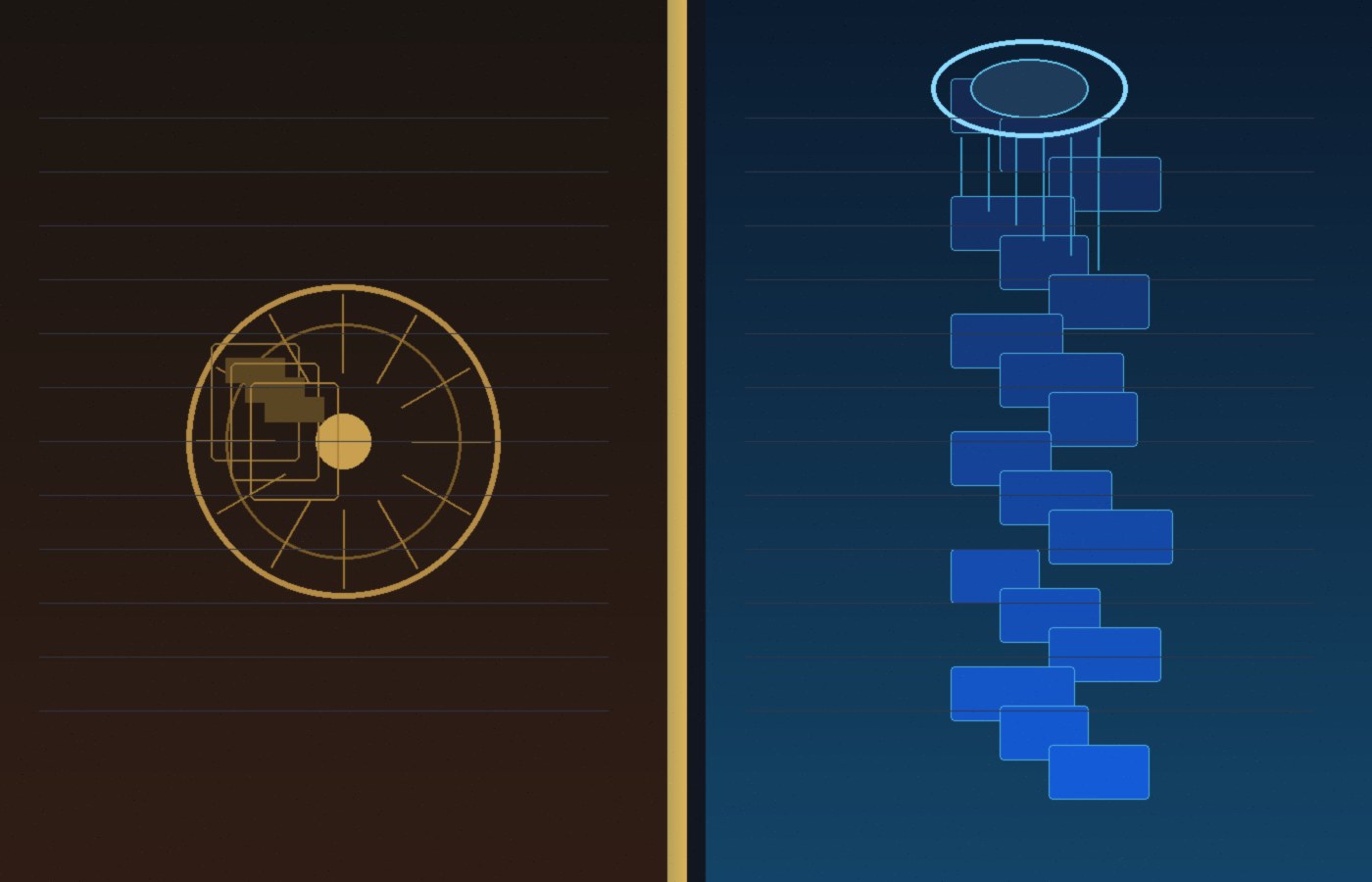
The image that runs through this piece is the **two ledgers**. One books time and closed supply. The other books open supply and mood. Collapsing them into a single sentence—“Pokémon is up”—is the cheapest market grammar. Splitting them is the reading method that actually pays in this autumn.
I. Default Logic: An Index Rally Means the Whole Category Is Rallying
The industry’s default logic is clean, and therefore easy to abuse.
When a headline index climbs, the community auto-completes the story: money is coming in, sentiment is thawing, the next card “should” follow. A seven-figure hammer adds romance—scarcity, nostalgia, history. Collectors and investors learn the same vocabulary: headline, distance from ATH, this week’s percentage.
Mid-October 2026’s surface numbers almost perfectly feed that grammar. TCGCharts’ Market Pulse for the week of 16 October showed the Pokémon 200 at 2,911, up about 5.0% over two weeks and only ~0.5% below its all-time high. Sentiment rose from 35 two weeks earlier to 39—still in Fear, yet enough to invite tidy “opportunity in fear” copy. Tracked market value, now including PSA+CGC+BGS, stood at $14.19B, roughly +8.2% over two weeks on a like-for-like basis.
Stop there and the conclusion writes itself: the category is rising.
What cuts through is another set of contrasts buried in the same weekly. The Grail 25—about two-thirds modern weight, plus Pikachu—was −0.6% over two weeks and −3.8% in the latest week, at 2,505. The harder buckets: pre-2011 PSA 10 median prices were +36.7% over the last 30 days versus the prior 60-day window; about 90% of 307 cards were higher; 81 of 91 pre-2011 cards inside the Pokémon 200 rose this month. Post-2011 PSA 10 median: −7.3%; only about 30% of 1,215 cards higher; Mega Evolution–era cards −23.5%.
Same category, same weekly, same PSA 10 language—and the river already forks. Default logic wants “Pokémon.” The data answers with “which era of paper.”
II. Breaking the Script: Pack Report’s +24% Versus a Modern Basket Pinned Near 100
If index buckets still sound like statistics, the Pack Report / Rip Station dual-basket index published 14 October 2026 draws the two ledgers as a line chart that barely needs narration.
The method is proprietary but disclosed with interest: two graded baskets, baseline 100 on 1 June; pricing from Rip Station’s handling of public comps. The vintage basket printed 125.5—about +24% in roughly four and a half months. The line tells its own story: a slow June–July climb; an early-August step around Illustrator and Snap–related sales; a September pause; then a second early-October lift. The modern basket printed 101.0, trading roughly 98–103 the whole period. The gap is about 23 points—not a mood gap, a structure gap.
The sharper sentence sits beside the method, in supply fact: every set in the modern basket is still in print, being reprinted (Ascended Heroes tins), or about to be overshadowed (Delta Reign, 6 November). Paper that cannot be reprinted and paper still on the press share a trademark and no longer share a valuation function.
That is where default logic cracks. Default asks whether the category is hot. After the split, the question becomes whether a card’s supply curve is permanently closed. The first is good for headlines. The second decides which ledger your money is standing on.
III. Numbers Pin the Rhetoric: Settled Hammers Versus an Auction That Paid Only 17%
Without a settlement filter, the auction room is the fastest hallucination machine.
October’s headlines were loud enough. Alt on 8 October recorded a Neo Genesis 1st Edition Typhlosion PSA 10 at about $1,549,690 (population 13; prior record around June near $415,500); the same event put a Base Set 1st Edition Charizard PSA 10 near $1,385,274, above Goldin’s February mark around $954,800. Goldin on 11 October showed an Art Academy Raincoat Pikachu PSA 10 near $1,037,000—the same card had produced a ~$8.4M story number at Fanatics on 27 September; for ultra-low-pop curios, the weekly itself treats that as story, not a valuation anchor.
What recalibrates market grammar is the **settlement rate** on Fanatics Collect’s 11 October digital sale: about $30.6M in bids across 12,346 lots; by Friday only about $5.3M paid—roughly **17%** of the money. About 62% of lots settled, but the dollar share stayed tiny: many low-dollar closes inflate “lots paid” without proving “capital arrived.” TCGCharts’ rule is harsh and necessary: Fanatics lots more than ~3× recent price stay out of effective pricing until paid.
The sound of the hammer and the sound of money clearing are not the same sound. On the vintage side, many cited prints are paid: Neo 1st Edition PSA 10 medians more than tripled since summer—Raikou PSA 10 about $204k (pop 37), Houndoom about $144k (pop 29); Gold Star Raikou PSA 10 from roughly $14–16k in August to about $70.1k in October (~5×). Legendary Collection reverse holos: of 35 with enough PSA 9 sales, all higher, median about +98%; Gyarados roughly $6.8k → $19.55k, Meowth about $1.6k → $6.6k. e-Card holos: median about +125% across 24 with regular PSA 10 sales.
Settled hammers write “cannot reprint” in cash. Unsettled shouts write “heat” in screenshots. The two ledgers part company at the auction door.

IV. Reflux and Misalignment: When Pikachu’s Cap Barely Moves, Who Speaks for the River?
There is a finer misalignment: character market caps and grading supply can dress category mood as a single thermometer.
The graded Pikachu market sat near $2.14B (−0.4% over 30 days) while Charizard was about $2.01B (+17.3%), Gengar about +37.8%, Lugia about +45.5%, Gyarados about +55.6%. A modern traffic card like Grey Felt Hat drifted from roughly $2,800 PSA 10 in July into the low-to-mid $2,000s—PSA adds about 50 PSA 10s of that card per day; 50,376 PSA 10s already exist. The PSA backlog fell from about 9M (22 September) to about 8.2M (6 October): the supply valve did not close; congestion only eased a little.
So the optical illusion returns: a mascot still screenshots well, an index still hugs ATH, an auction still mints seven-figure headlines—while the modern basket pins near 100, Grail 25 pulls back, and post-2011 PSA 10 medians fall. Money did not leave Pokémon. Money rotated into the ledger labeled **cannot reprint**.
The forward calendar speaks from the supply side too: Delta Reign on 6 November; Logan Paul’s Legendary Collection stream on 29 October. One is another print date for modern paper; the other is a traffic event for old paper. They can happen in the same fortnight without earning the same “therefore the whole market” sentence.
Close: Value, Redefined by “Can It Still Be Printed?” and “Did Anyone Pay?”
Set mid-October 2026’s Pokémon secondary market back on the table and what it really hits is not the morality play of “speculation,” but a quieter reading laziness—treating headlines as liquidity, indexes as the category, auction screenshots as payment, mascot caps as the river’s water level.
The data’s counterexample is blunt and clear: vintage basket ~+24% versus modern flat; pre-2011 PSA 10 median ~+36.7% versus post-2011 −7.3%; Fanatics money settlement ~17%; Legendary Collection, e-Card, and Neo 1st Edition writing closed supply in paid ink. Blunt, because it asks you to read one more table. Clear, because it refuses to let mood words replace a supply curve.
So **value** can be redefined here. Value need not equal today’s loudest image. It can equal: whether supply is permanently closed, whether the sale settled, and which ledger your position sits on. Independent judgment need not equal reflexive bearishness. It can equal insisting on the split under one trademark—even when the split makes worse headlines.
A short, honestly sharp checklist:
- Tag every target card: still printable / being reprinted / never again; only the last belongs on the scarcity ledger.
- At auction, ask first “did it clear?”; unsettled or far-above-comps quotes are story only.
- Keep Pokémon 200, Grail 25, and the Pack Report dual baskets separate; refuse one percentage for the whole book.
- Modern positions watch print and release calendars (e.g. Delta Reign); vintage positions watch population and paid comps—not how often the same mascot trends.
October is not over. The river still runs. What decides which bank you stand on is not sentiment crawling from 35 to 39—it is whether you admit that some paper has graduated from the press, and some paper ships again next week.
Xiaoguang

Sources & Further Reading
TCGCharts Market Pulse (week of 16 Oct 2026): Market Pulse — 16 October 2026