

If at the 2023 release of *Wilds of Eldraine*, *Agatha of the Vile Cauldron* was, in most Commander carts, only a Gruul mythic that “Kenrith runs and the bargain bin sometimes holds,” and if after *Marvel Super Heroes* landed in June 2026 it only crept to about $1.10 in Super-Skrull-style builds, then October 2026’s *Reality Fracture* sphinx season rewrote the same WOE#199 into something else. Wargamer’s price track updated October 16 puts it at about $13.19 on MTGGoldfish—roughly ten times the summer ~$1.10, about 1100%. MTGGoldfish’s weekly update for the week of October 18 (page dated October 19) shortens the arc further: that week it nearly doubled to about $13, completing the climb that started near $1 in June.
The weight is not the percentage in a screenshot. Money is chasing a demonstrable Heartwood combo. The new sphinx commander *Aerid Konstrari* rewrote Agatha from “discount utility” into a “five-mana heartbeat,” and the secondary market began pricing combo tax. The image that runs through this piece is that heartbeat inside the vile cauldron. You can hear it because the cost falls from six to one, then to free. Paper price follows the heartbeat.
1. Default logic: old-mythic bargain pricing and the Kenrith piece that “almost never gets expensive”
Industry default logic is clean, and therefore lazy.
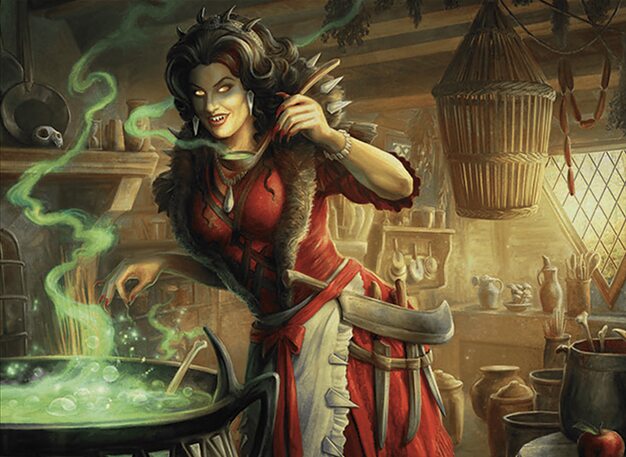
For a 2023 Gruul legendary mythic, the default story is almost fixed: watch EDH staples, watch Kenrith-style multicolor engines, watch “useful but replaceable.” Agatha’s card (Scryfall WOE#199) reads like that part. Cost {R}{G}, 1/1 Legendary Human Warlock. Activated abilities of creatures you control cost {X} less to activate, where X is Agatha’s power; this effect can’t reduce the mana in that cost to less than one mana. Also {4}{R}{G}: other creatures you control get +1/+1 and gain trample and haste until end of turn. Art by Jason A. Engle—the cauldron bubbles; the power number slept on the shelf for a long time.
Wargamer walks through her role as a tool in Kenrith, the Returned King and in *Marvel*-era Super-Skrull (a Fantastic Four–themed Kenrith variant). Useful, rarely a “must-have.” Draftsim’s weekly (October 10–16) also notes she already had a little cEDH Kenrith demand. Default logic therefore almost writes itself: old mythic, replaceable cost reduction, not a new-set face card—price should sit in the bargain layer. Summer ~$1.10 is exactly that floor reading.
Default logic says old parts should be cheap. Shelves mostly agreed before June. The exception stings because it refuses to stay bargain stock.
2. Breaking the script: Aerid’s six-mana activation and the five-mana heartbeat
Price-flat tables still look like seasonal weather. *Aerid Konstrari* rewrites weather into climate.
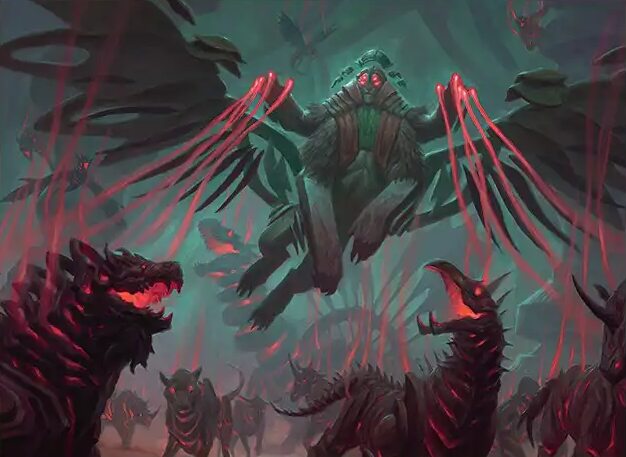
Aerid (Scryfall FRA#121) is a Legendary Creature—Elder Sphinx, cost {1}{R}{G}{G}, art by Chris Rahn. Flying. When Aerid enters or dies, create a Heartwood token (a red and green artifact with “{T}: Add {R} or {G}”). Activated ability {6}: create a Heartwood token, then Aerid gets +X/+0 until end of turn, where X is the number of artifacts you control. The ability asks only for generic mana—Wargamer flags that. Even a one-mana discount already helps.
Push Agatha to five power and the combo closes. Aerid’s six-mana activation drops to one. The activation makes a Heartwood; tap it immediately for {R} or {G}, enough to pay the next activation. Loop for infinite Heartwood. At six power, the cost hits the floor rule’s “free,” and you can also line up infinite mana. Wargamer’s sentence is short. On EDHREC, about 2700 of roughly 4500 Konstrari decks include Agatha. Draftsim spells the same mechanics and adds amplifiers like Doubling Season to turn infinite tokens into infinite red or green mana.
A second demand line sits in the same weekly. With Agatha at seven power, *Kiora of Fire and Ashes* can shrink a token-making ability to one mana; add *Ganax, Astral Hunter* and each Dragon also makes a Treasure that pays the next activation. The main catalyst remains Aerid. The side path shows that “discount to the floor” is Agatha’s product character; new commanders only plugged in a louder power supply.
Price tracks the lists. Draftsim writes that Agatha has roughly tripled since October started, climbing especially steeply last week. Wargamer on October 16 cites MTGGoldfish around $13.19. MTGGoldfish’s weekly says it “nearly doubled to $13.” Counter tracks run a little lower, same direction. In TCGplayer tracking around October 18–20, nonfoil WOE#199 sits about $10.46–$11.16, roughly +280.9% over 30 days from about $2.93, and from about $1.20 in mid-June to about $11 (about +830% on that track). SpellBook Finance on October 19 logs TCG Market NM regular near $11.01. Boards differ by a dollar or two; the direction matches. Old bargain stock got written as combo tax.

3. Opening the ledger: Radiant Solar and the “AFK old card woken by a new commander”
If you only stare at Agatha, the story narrows to “another WOE mythic got expensive.” Pull the lens to the same week’s *Radiant Solar* and you see another grammar Reality Fracture’s secondary market is running in parallel: old paper can be suddenly re-priced inside a new commander list, even after years AFK on the shelf.
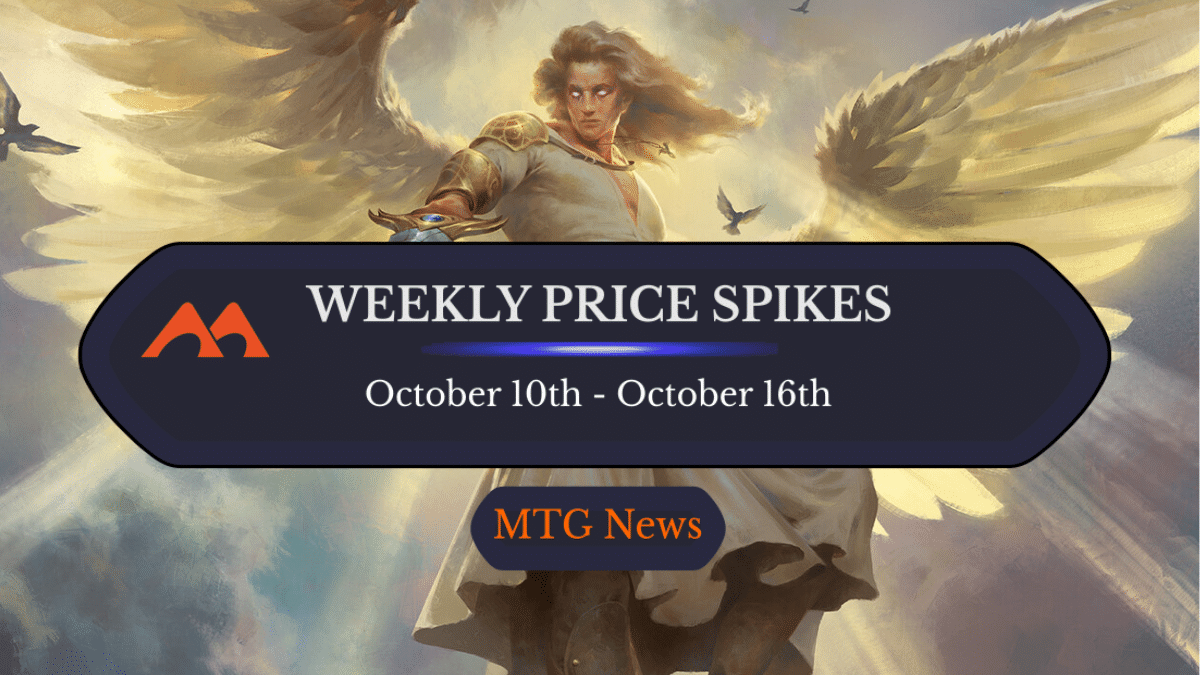
Radiant Solar (Scryfall AFC#9, art by Alexander Mokhov) comes from *Adventures in the Forgotten Realms* Commander. Flying, lifelink. Whenever it or another nontoken creature you control enters, venture into the dungeon. Draftsim’s weekly says it roughly doubled from about $2–$3 to about $4–$5, driven above all by cEDH *Dack Fayden, Helping Hand*. Dack’s ETB reveals until it finds a creature for each opponent; those creatures enter under your control first, then go to opponents. Radiant Solar eats venture triggers in that “enters on your side first” window. On EDHREC, Harvey McGuinness calls Dack a “one-spell boogeyman” and shows how creature packages make the ETB a deterministic loop. Draftsim stresses that Dack lists packing Radiant Solar are already posting cEDH results, and the angel has never been reprinted.
MTGGoldfish’s weekly writes the counter higher: Radiant Solar doubled to about $7, also on Dack Fayden Helping Hand. The author even admits not knowing the card existed before the weekly winners list, and never seeing it played. Draftsim’s $4–$5 and MTGGoldfish’s ~$7 differ by timing and board; both belong to the same beat—“AFK angel woken by a new commander.”
Lay the two ledgers side by side. Agatha is “cost-reduction part × demonstrable infinite Heartwood.” Radiant Solar is “venture trigger × Dack’s enter-order hole.” The shared point is narrow: a new commander re-prices paper from an old 99 or binder. The difference is also narrow: Agatha’s move is measured in roughly 10× with 2700/4500 EDHREC density; Radiant Solar’s is a double with a more “stranger encounter” narrative. Both lines show sphinx-season secondary markets pricing new mythics and taxing “old paper named by a new face” at the same time.
4. Return: what “value” means after combo tax is written into asks
What this move rewrites is where an old mythic sits on the timeline.
In the past, a WOE utility mythic’s time meaning was: noise in release week, drop into the Kenrith sidebar, long-term bargain pricing. Now the timeline gets another cut: is there a new commander that writes its numbers into a demonstrable loop? Wargamer’s 10× reading, Draftsim’s “tripled since October started,” MTGGoldfish’s “nearly doubled to $13,” and TCGplayer’s ~+280.9% over 30 days all point at the same scene. Sealed supply and release-week emotion no longer alone decide this sheet. The Heartwood heartbeat inside commander lists is what sets the ask.
For anyone holding a cart, the return should land on method. Ask three questions first. In this old mythic’s demand function, how much is generic cost reduction, how much is a named commander combo? Can EDHREC’s “2700/4500” be restated at your own table as “I see the loop”? Are you buying a “demonstrable nonfoil engine part,” or a “sphinx-season emotion screenshot”? If the three answers are unclear, do not treat ~1100% as a personality proof, and do not treat June’s ~$1 as “it will never wake.”
The method can be shorter. Open Wargamer’s rules write-up, Draftsim’s weekly spike notes, MTGGoldfish’s counter narrative, Scryfall WOE#199 and FRA#121, then ask one line: at five power, does six become one? Answer clearly and combo tax separates from bargain price on its own. Fail to answer and the percentage is only another spelling of noise.
Close: secondary-market “independence” means refusing to merge old and new paper under one “sphinx season is hot” sentence
Put Agatha’s 10× back into Magic’s October 2026 room and what it hits is a reading habit: assuming old mythics forever price as bargain stock; assuming only new-set faces climb the weekly spike list; assuming a Kenrith tool and an infinite Heartwood loop can share the same “kinda useful” sentence.
Public data’s counterexamples are concrete. Summer ~$1.10 → Wargamer/MTGGoldfish ~$13.19 (~10×, ~1100%). Roughly tripled since October started (Draftsim). Nearly doubled to ~$13 that week (MTGGoldfish). TCGplayer ~$10.46–$11.16, ~+280.9% over 30 days, mid-June ~$1.20 → ~$11 (~+830%). SpellBook October 19 TCG Market ~$11.01. EDHREC ~2700/4500 Konstrari. Five power presses {6} to one; six power presses to free and infinite mana. Radiant Solar on Draftsim ~$2–$3 → $4–$5, on MTGGoldfish up to ~$7 on Dack Fayden Helping Hand. Concrete, because it asks you to read activation costs and asks—not only the set name and the word “sphinx.”
So “independence” can be redefined here. Independence can mean insisting on separate ledgers inside the same Reality Fracture heat: one slice of price belongs to new commander faces, another to named old combo parts; the “AFK for years, woken by cEDH” accident tax gets its own column. Building a watchlist can also mean first writing “which old papers have numbers written into demonstrable loops,” then deciding whether you will pay cash for the vile cauldron.
Executable notes, short:
- When an old mythic spikes, split “generic tool” and “named commander combo” into two columns; if you cannot restate them, treat the average as noise.
- Log five-power and six-power separately. Discount to one mana, and discount to free plus infinite mana, are two risk bands and two demand bands.
- Keep EDHREC density (e.g. 2700/4500) and weekly counter prices on two tables. High inclusion explains demand; it does not explain your entry.
- Separate Agatha’s main line from Radiant Solar’s side line. Do not merge 10× combo tax and 2× AFK tax into “old cards are all rising.”
- Board gaps ($13.19 vs the ~$11 band) get source and date first, then “should I chase.”
October’s sphinx season is still printing lists. For *Agatha of the Vile Cauldron*, Engle’s cauldron still bubbles. What changed is that the secondary market suddenly will pay again, on a 2023 bargain mythic, for Aerid’s heartbeat from six down to one. Someone showed that old paper can lie in the Kenrith sidebar for years and still fail to stop a cost-reduction engine being copied into 2700 lists from writing itself as combo tax.

Sources and further reading
Draftsim Weekly Price Spikes (Oct 10–16) MTG Weekly Price Spikes (Oct 10–16)
Scryfall Agatha of the Vile Cauldron (WOE#199)