

If Steam Early Access’s default script is “ship a half-finished build, trade wishlists for cashflow, then patch forever,” then the AMA Atom Void (VastVenin on Reddit) opened on r/gamedev on 8 February 2026 almost rewrote that ledger in public. The game is Dead Grid: turn-based zombie strategy, a card table with a 3D battlefield inside it, heavy 1980s retro smell. This piece is not based on long first-hand play. Scenes, numbers, and the author’s path below come from the public AMA, official press kit and FAQ, and the Steam store page and news. Where the text says “source observation,” read it as observation, not a clearance verdict.
The image that runs through this piece is Early Access as a public workshop—and the camp with its eight major updates. A workshop means the door is open and strangers can pick at the joints. A camp means people stay, so you learn whether supply, difficulty, and tooltips are enough. The eight major updates are how, over four years, the author welded a half-built card table into a settlement you can live in.
1. Default logic: Early Access equals half-finished market entry; 1.0 is just a marketing node
Industry default logic is clean—and therefore lazy.
Once an indie project hangs the Early Access tag, teams usually open a familiar menu: get the core loop “demoable,” grow wishlists into the thousands, launch for the first review wave, then keep the funnel alive with visibility rounds and sales. Players learn the same vocabulary—“playable,” “they’ll add more,” “buy a coupon first.” That pact makes half-finished market entry forgivable industry grammar.
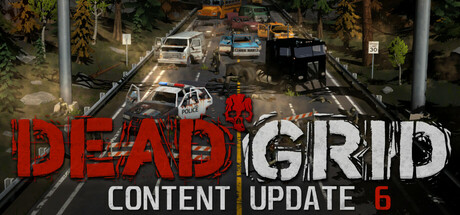
Dead Grid is hard to forgive under that grammar: tactical depth, mercenary builds, camp management, oceans of items and skills—any half-cooked piece expands into frustration on a turn. In the AMA the author is blunt: inspiration from Jagged Alliance, XCOM, Hearthstone, and a little Darkest Dungeon for camp management. The press kit adds that combat needed to stand out from the ever-growing card-game trend. The aim was not a short “ship then fix” hit, but cooking a tactics table that could stand.
The fork is here. Default asks what to cut when wishlists are thin, and whether 1.0 can be a promo node. He asks instead: once the public workshop is open, how each negative review and each major update dismantles the illusion of “eighty percent done” and welds back a camp people can still inhabit.
2. Read the timeline honestly: 2017 and 2018, part-time prototype, then full-time workshop
The historical coordinates must be read side by side; there is no single official chronology to pretend.
The AMA body says work began in 2017 and Early Access in 2022. The official press kit says work on Dead Grid began in 2018; the first year was part-time prototyping to find a combat system that stands out; after small pre-alpha feedback, development went full-time toward Steam Early Access. Steam news around 1.0 also places initial development in 2018. This piece keeps both: the start may be a 2017 personal beginning or a 2018 formal project. The gap is small, but it reminds readers that solo timelines are often flattened after the fact; public materials are not singular.
The FAQ’s roster reads like a camp roll: one programmer/designer/artist; three people who playtested regularly; one morale-manager cat. Tools are concrete: Unity C#, Pixelmator, Aseprite, Audacity, Logic X. The AMA nails the engineering choice: entire game in Unity C#, no visual scripting; about half the art made by him, the rest purchased; all music, voice, and SFX purchased. Steam’s AI disclosure is careful: as a solo developer with hundreds of items, a small subset of icons came from AI-generated packs, then were hand-modified in Krita to fit the style; most artwork was drawn manually. Source observation: this is not an “all-AI” story—it is how a solo title draws a line inside an icon flood.
The hinge of the timeline is wishlists and launch. AMA: Early Access launched with around 2,500 wishlists; over four years about 25,000 were gathered. Press kit / FAQ and store agree on the public anchor: 24 March 2022 into Early Access. He later said that at EA launch he thought the game was about 80% done; after four years of big updates he would say maybe 50%. That sentence is sharper than any wishlist curve. It rewrites “public workshop” from marketing talk into production epistemology: only when the door opens do you see how many load-bearing walls the drawings still lack.
3. Three layers on the table and the camp: how the mechanical scene was welded in alpha
Mechanical scenes belong on the turn, not on a feature list.
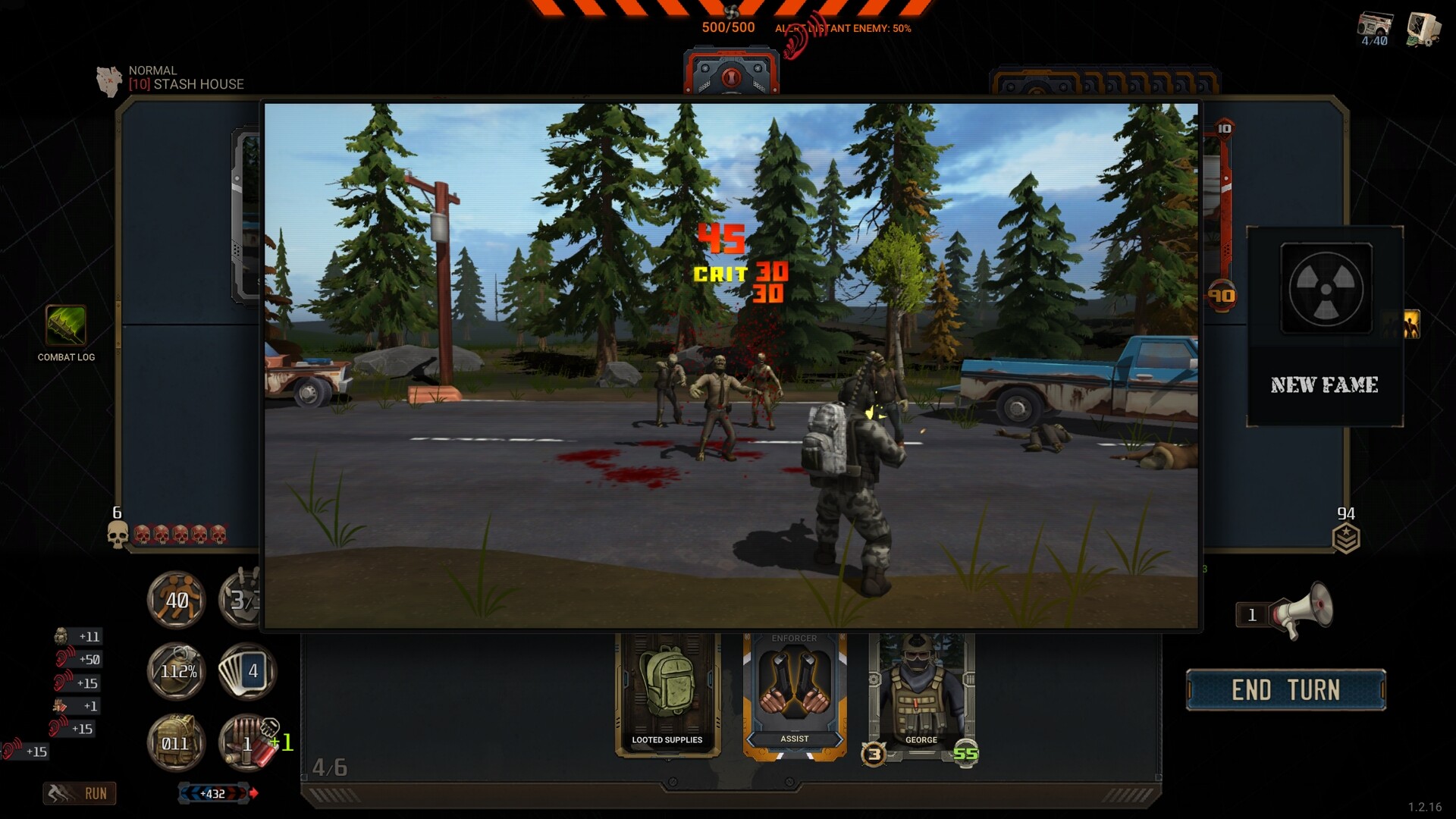
In the AMA he recalls that about halfway through alpha he introduced a card-selection beat at the start of the player’s turn, so there was something to look forward to beyond interacting with cards in hand. The board evolved from two interactive stages to three: (1) decide which cards to play from hand; (2) decide actions of cards already in play (as in Magic or Hearthstone); (3) select a card to draw at turn start. His worry was plain—if every turn starts to feel the same, that is a big problem. “Fun” is subjective: some want pace, some want to think every action; the game has to allow both, even if playing fast is not optimal.
Under source observation, the store page matches that philosophy: go silent, go loud, fire and explosives; mercenaries individually voiced with personalities. Current feature copy lists 16 voiced mercenaries, 5 classes, 115 skills, unlimited respec, a Revenant class from reanimating the dead, 17 character attributes, 370 Steam achievements (the achievements API snapshot also shows a neighboring 375), 7 challenge modes with leaderboards, New Game+, hundreds of upgradable weapons/consumables/gadgets, 150+ unique items that reshape skills and playstyle, survivors joining the camp, 42 side missions. Early press-kit numbers do not fully match the live store (e.g. four classes, twelve skill trees / sixty skills then)—exactly the trace of four years in a public workshop: numbers rise, definitions shift, the camp expands.
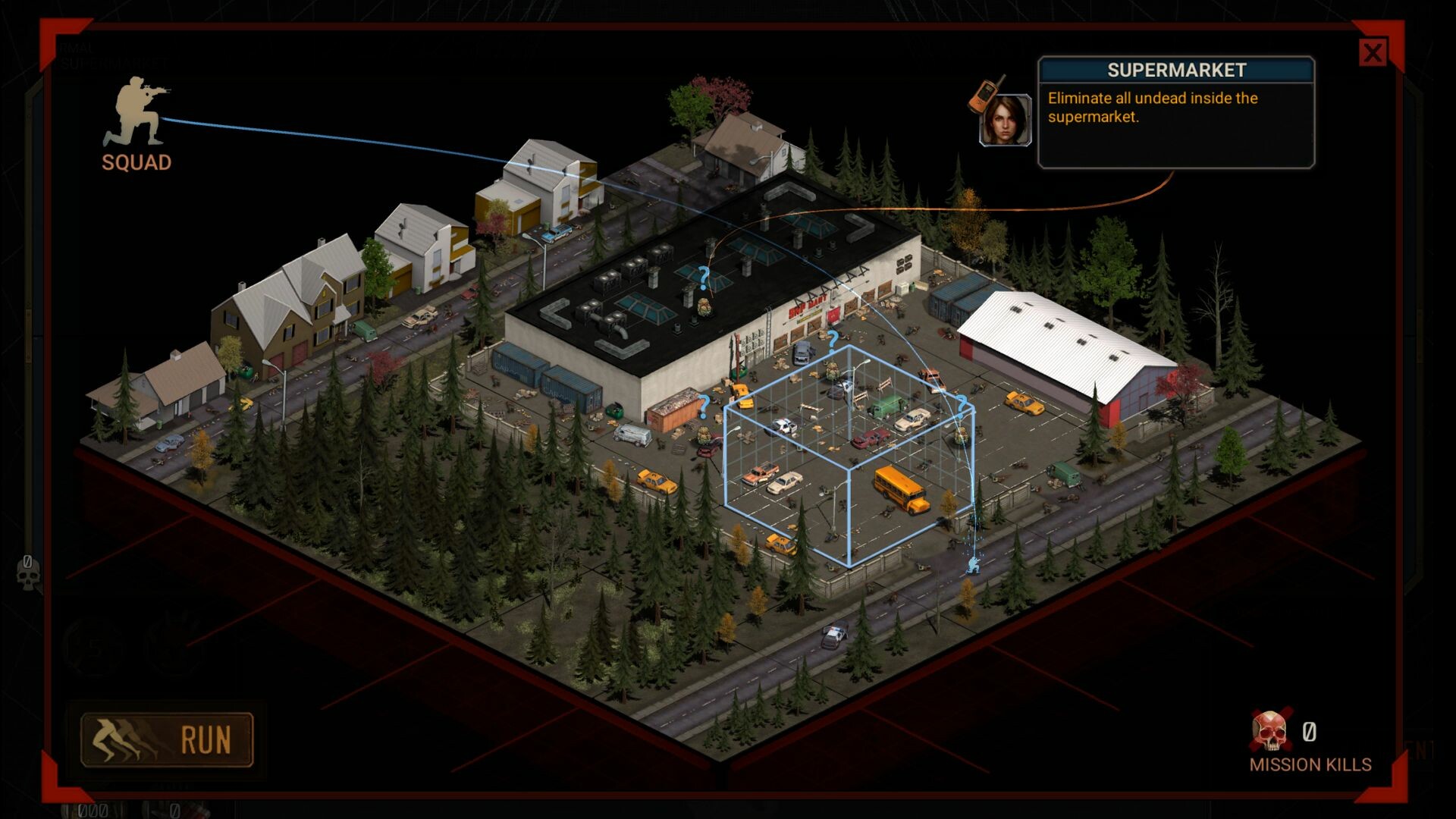
On maps and art he described collage logic: some hand-drawn, some screen-capped and cropped into reusable sprites; each map tile has three layers—dirt/road, foliage, buildings—so many tiles reuse across levels. The longest work, he said, was animation states for twelve weapon types: shooting, reloading, swinging, idle, hit—hundreds of clips. His background is programming; the art still had to be done—“by far the most difficult part was finding motivation for tedious content work.” 1980s Romero zombie movies that are funny and cheesy rather than scary, Commando-flavored characters, and a synthwave soundtrack were the fuel that kept him in the workshop.
4. Workshop opens: too hard, five difficulties, soft launch, and the “ninth ship”
What Early Access really taught him was not only content progress, but how to test, push, and announce big upgrades to a crowd.
He is frank: launching EA in 2022 was scary; only about five people had alpha-tested; he worried about crashes, lost saves, performance. People judge early releases by full-game standards and often do not understand that Early Access needs time to flush out with feedback and bug reports. Most early negative reviews came from difficulty—he had played so long it was not hard for him; new players were frustrated. He quickly added five difficulty modes, including an Easy mode with barely any challenge; by then he had probably already lost some people to those reviews. Fonts too small and missing tooltips took several updates to improve. Future projects, he said, will prepare localization and larger fonts (especially for Steam Deck) from day one—things that seem obvious now were not in the first two years.
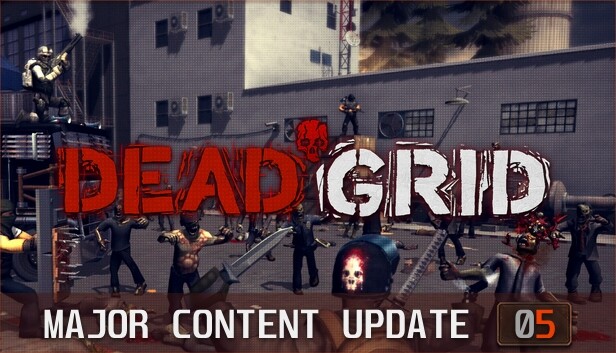
The more important production move is the soft launch of 1.0. AMA: about ten days before taking the store page out of Early Access, he released the full version to existing players and patched with them first; by the time the store page went live he did not have to fear critical build issues. He highly recommends it. Dates align with Steam news: 26 January 2026 carries “DEAD GRID 1.0 - Out Now!”; the store lists release as 4 February 2026. Soft launch splits “version 1.0” from a single marketing day into two rituals: inspect with camp residents first, then open the shop to passers-by.
That is why 1.0 was far less scary—it was essentially the ninth time he was doing the same thing: announcing a big upgrade to a crowd. Four years, eight major content updates, trained shipping into muscle memory. Wishlists from ~2,500 to ~25,000 are the crowd at the door; the eight major updates are the load-bearing structure welded inside the workshop.
5. After 1.0: Martial Arts, Rewired, Demo, and “not treating it as a pure product”
The public workshop did not close on 1.0 day.
The Steam news chain is clear: March 2026 brought 1.1 Slow Roast; late July 1.2 Aftermath (Martial Arts and follow-up balance patches); 1 September 1.3 Rewired—reviewing and rebalancing many skills, reworking less-used ones, quality-of-life, and a Party-Based RPG Fest notice; mid-September a free Demo (app 1614860) with the first three campaign missions and any class. Source observation: this is not “ship then sleep”—it is the Early Access update cadence carried into the months after full release.
Money and motivation are unvarnished. AMA: mostly self-funded from savings; sales covered some expenses but not a living; improving after 1.0. Worth it? Financially, not yet for the effort; personally, finishing a big project and building experience and confidence—definitely. He works from feeling, not bullet-point selling; many features came from a feeling while playing something else that he wanted to try in Dead Grid—even if prototyping took a week. “I don’t treat my game like a product and it has hurt my sales most likely, but losing motivation is the biggest threat to the project never coming out.”
Marketing advice is earthy and checkable: Steam keys to YouTube channels that play similar games (subject line STEAM KEY, personalize, bold the key, GIF helps); contact curators via partner tools; press kit with a transparent PNG logo; watch for key-farming scams. Visibility rounds on his biggest content updates showed traffic spikes; he kept rounds for later. If sales had been strong he might have saved rounds for post-1.0 DLC—but the game had been in EA so long he was experimenting with visibility. These lines are not growth-hacker gospel; they are a camp manager’s log.
Closing: Indie means willing to treat Early Access as a public workshop, not a half-finished discount shelf
Put the February 2026 AMA beside the press kit, FAQ, and the news chain around 1.0, and drop them into that autumn’s indie floor: what they hit first is a quiet production habit. People default to Early Access as half-finished market entry, treat “eighty percent done” as plan truth, treat 1.0 as a checkmark on a marketing calendar, and rarely ask whether four years after the door opened the card table has truly become a camp you can live in.
Atom Void’s other path is clumsy and expensive. Clumsy: reading 2017/2018 side by side instead of flattening them; writing “too hard” into five difficulties and font/tooltips instead of blaming players; splitting 1.0 into soft launch and store-exit day instead of one carnival. Expensive: roughly five years of full-time equivalent (his estimate: of eight years, about five at forty hours a week at the machine; the rest breaks, lost motivation, other prototypes), plus the umbilical habit of jotting ideas on a napkin in a café. Financial return has not yet matched the effort; a store snapshot shows about 93% positive of 511 user reviews (Steam recommendations total also 511)—numbers can comfort, but they do not replace what the morale-manager cat never wrote into the engine.
For small teams the packet is especially useful, and especially sharp. You may not ship a zombie tactics table or sit four years in Early Access. You do have your own “already good enough” list. A launch you thought was eighty percent. A bad review you wanted to delete instead of adding Easy. A 1.0 you dared not soft-launch. A game turned entirely into a product checklist until your own motivation dried out. Dead Grid’s public work writes the cost in plain dirt: the third card layer can arrive late in alpha; weapon animation can be the most demoralizing stretch; visibility rounds can wait for the biggest updates; localization templates should start on day one—he did not, and he says the road ahead will hurt.
Short prompts:
- Before Early Access, write down what completion percent you believe; force a revisit twelve months after the door opens; allow eighty to become fifty, and turn the gap into an update queue, not shame.
- Treat difficulty and readability as camp infrastructure: fonts, tooltips, multiple difficulties share priority with new weapons; what seems “obvious” in year two often was not in year one.
- Soft-launch major versions when you can: let existing players inspect and patch first, then take the store page out of Early Access; shipping muscle is built by repetition, not launch-day adrenaline.
- Protect motivation before perfect productization: a feeling-led prototype can take a week; before the game is only a bullet list, ask whether the feeling is still there—losing motivation kills harder than missing one visibility round.
2,500 wishlists in the door, 25,000 out; eight major updates; ten soft-launch days; Martial Arts and Rewired still after 1.0. While the Demo is still downloadable and the news still updates, the author has already fixed the audit standard: not “can we remove the Early Access tag,” but “after we remove it, has that zombie card table become a camp you can live in.”

Sources and further reading
Steam store: Dead Grid (release listed Feb 4, 2026; review snapshot ~93% / 511)
Atom Void Press Kit: https://atomvoid.com/press/ (work began 2018; EA 2022-03-24)
Atom Void FAQ: https://atomvoid.com/faq/
- Steam news (selected): DEAD GRID 1.0 - Out Now! (2026-01-26); 1.2 Aftermath (2026-07-30); 1.3 Rewired (2026-09-01); Demo Now Available (2026-09-11)