

If the default script for a first Steam launch is usually “sit on a big enough dream, hide the numbers in DMs, and wait for a revenue screenshot to speak for itself,” then the moment in mid-August 2026 when SwimDog Studio’s dog_developer (also swimwithdog) pressed the release button from a swimming pool rewrote that script into a publicly checkable labor ledger. The game is *Incremental Fishing*—short, light, hover-to-catch, a sea where numbers go up. This essay has not playtested the finished build; scenes and figures below come from the author’s public posts on r/IndieDev and r/incremental_games, plus Steam store and API fields as of collection time.
The facts that can be nailed down are not complicated. February to August: about six months. Roughly three and a half of those were full-time pure development; the rest went to marketing, polish, and learning how to actually put a game on Steam. Release: August 12. Wishlists at launch: about 3,000 (the author wrote ~70% from Steam Next Fest and events, ~30% organic via devlogs and community posts; a same-day LinkedIn note was finer-grained: a little over 3,100). Day one: about 60 sales. Two weeks later: 1,700 copies sold; median playtime 2+ hours; among 34 reviews, two deserved negatives tied to launch bugs, patched within the first few hours. In week one, Steam Deck support and a Supporter Pack already shipped. Then the day the author admits crying: DangerouslyFunny, with more than two million subscribers, made a video about the game.
The image that runs through this piece is the green light by the pool, and the ledger willing to be checked against. The green light sounds accidental; as production ethics it is a set of verifiable promises. Ship a short game that can launch, patch, and report numbers first—then talk about the next dream closer to *Frostpunk* and *IXION*. Figures must leave a source. So must feeling.

1. Industry default: a first launch is either mystified or reduced to a revenue shot
Indie culture has a familiar grammar for “first game.” One side mystifies: little talk of schedule, wishlist structure, or why day one failed in concrete terms, as if a first launch must be wrapped in destiny. The other side turns into revenue screenshots: total or weekly peak only, without where wishlists came from, whether refunds looked healthy, why negatives appeared, or which hour the patch landed. Players and peers learn to read these posts in the same vocabulary—“congrats,” “keep going,” “the next one will be bigger.” That pact makes “unverifiable” a forgivable launch grammar.
*Incremental Fishing* raises the cost of verification. It is not the narrative heavyweight on the author’s eventual dream list. On the Steam page, dog_developer is blunt: first Steam game, built solo every day; no big team, no big budget; a path that one day hopes to lead toward work inspired by *Frostpunk*, *IXION*, *Don’t Starve*, *Valiant Hearts*, and *It Takes Two*. In other words, short incremental fishing is a first step, not the destination. Once a step is typed as “not marketable enough,” industry default suggests sitting another two years until wishlists look like a win, then launching.
The fork is here. Default asks how a first game can look big enough. They ask instead whether a full launch can be run end to end—where wishlists came from, what day one sold, what remained at two weeks, why negatives happened, when the patch landed—and whether those numbers can be laid out for peers to check, not only to upvote.
2. Method: a six-month ledger—three and a half months of build, the rest learning how to ship
The author writes the timeline like a work order, not a motivational abstract. Total journey: February–August, ~6 months. Pure development: ~3.5 months full-time. The rest: marketing, polish, learning Steam launch ropes. The launch post also carries a line easy to read as a joke and better read as a method statement: AI Disclosure—no AI was used to create the game; solo from February.
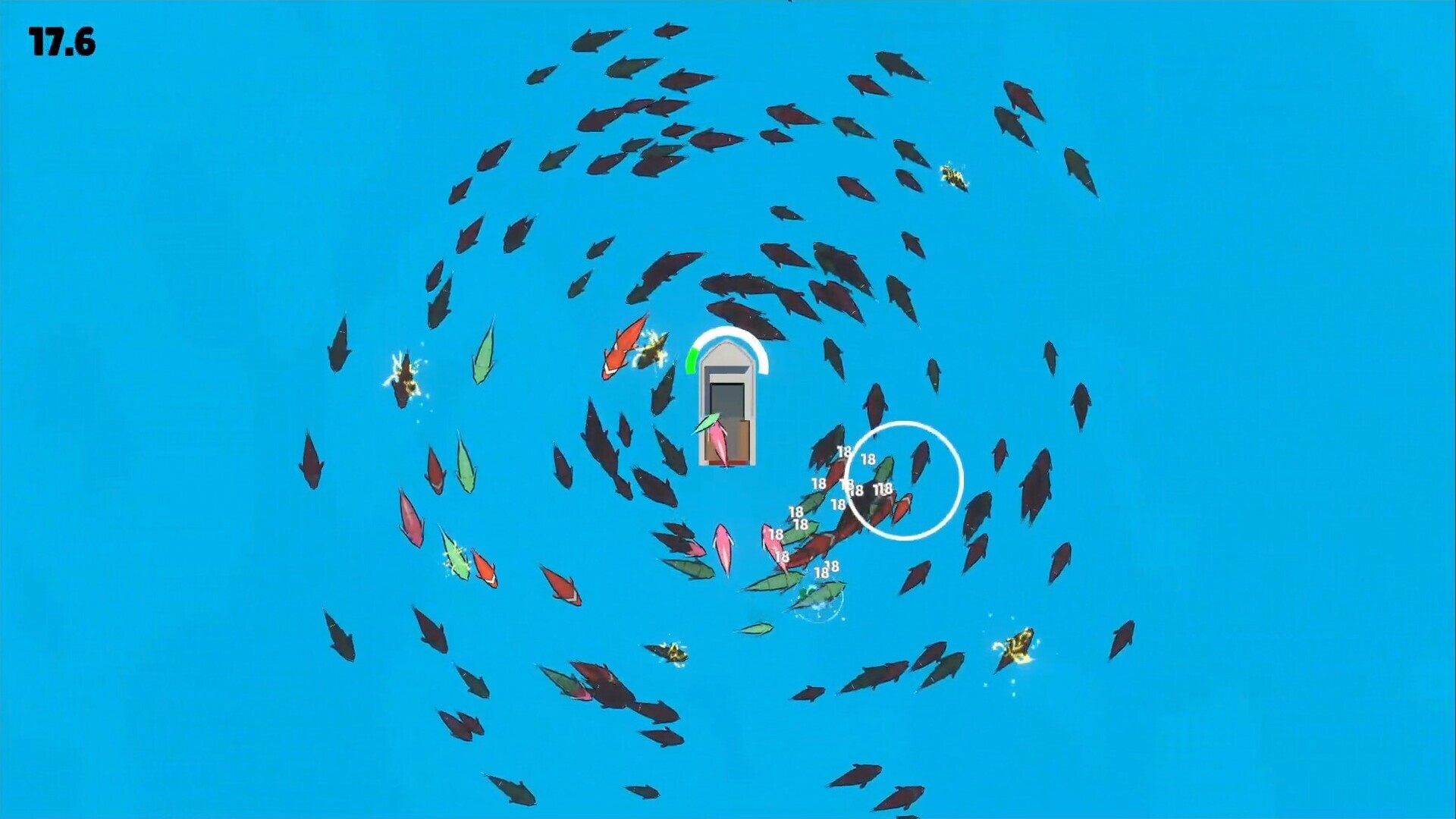
The first cut of method is writing “short” as a product choice, not as a lack of ability. The store blurb is clean: a short relaxing incremental game about fishing across diverse ocean biomes and upgrading your ship. On the play side, the r/incremental_games launch post frames it as hover-to-catch and watching numbers rise. Achievements sideways confirm the loop: catch 10 / 100 / 1,000 / 10,000 fish, plus rarity tiers. Price at collection time: $5.49. Scope and price declare together: this is not asking players to prepay trust for an unfinished epic, but to pay for a short loop that median playtime shows can be walked for two-plus hours.
The second cut is clarifying wishlist structure, not only the total. Of ~3,000 wishlists, ~70% from Next Fest and events, ~30% from organic logs and community. That ratio is ethics. It refuses to mythologize “having wishlists” as “content naturally seen,” and refuses to be ashamed of event traffic. Events are labor. Logs are labor. Organic posts are labor. Split the ratio, and later teams can judge which side to bet next week on.
The third cut is making the launch act itself a narratable scene. In the two-week postmortem the author writes: yes, I really hit launch while sitting in a swimming pool. A same-day LinkedIn note is even earthier: by the sauna, more precisely beside the tub. The scene can be light; the responsibility cannot. The second the green light is pressed, six months of ledger sit behind it, and ahead sit day-one’s sixty, hour-one patches, week-one Deck support and Supporter Pack. The pool is not a romance filter; it is bodily evidence that the deliverable was already pushable.
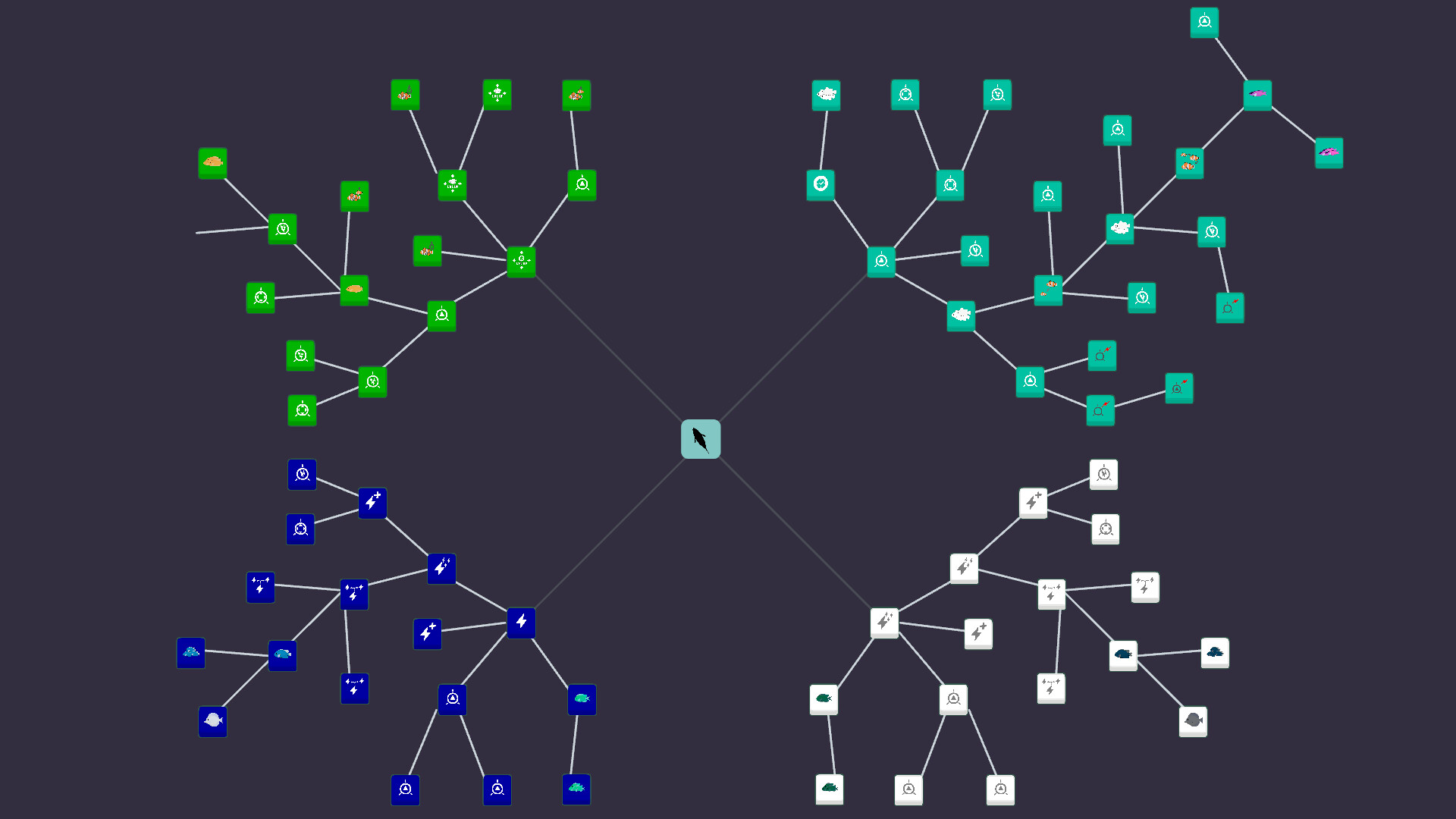
An earlier itch.devlog supplies a prior contrast. Long before the full Steam build, the prototype saw about 1,300 players in two days; the author was reworking progression balance, the upgrade system, upgrade-tree art, and considering sharks, turtles, and more. Early traffic was not written as “already won,” but as “still shaping.” That matches the later Steam short-game stance: get the loop turning first, then talk bigger dreams.
3. Two-week ledger: 1,700 copies, median 2+ hours, patches inside hours
On August 27, exactly two weeks after launch, dog_developer laid out on r/IndieDev a ledger that almost wants to be a spreadsheet.
Copies sold: 1,700. Wishlists at launch: ~3,000. Refund rate: described as standard / healthy. Day one: 60 sales. Median playtime: 2+ hours—the author explicitly notes happiness with engagement. Reviews: 34; two deserved negatives from annoying launch bugs; those patched within the first few hours, with no critical issues reported since. Week-one updates: Steam Deck support and a Supporter Pack; bundles of multiple small incremental games at a discount were in progress.
The power of this table rarely comes from the integer “1,700” alone. It comes from every row carrying askable context. Sixty on day one against ~3,000 wishlists is conversion, not myth. Median two-plus hours against the “short and relaxing” promise is delivery, not talk. Two negatives admitted as “deserved,” with the fix window nailed to the first hours, treat review as a work order, not shame to delete. Deck and supporter pack squeezed into week one dismantle the default script of vanishing after launch.
As of collection time, the Steam page summary reads Positive—about 95% of 49 reviews. Between the two-week post’s 34 and the later 49 sits continued selling and reviewing. This essay marks both ends as source observation and does not turn the growth curve into settled success doctrine. Another demo-era figure from LinkedIn: ~21 demo reviews, ~90% positive. Set beside the full-game summary, the meaning is concrete—the short game already took a public audit via a playable slice before launch day, rather than leaving first contact to release morning.
One more figure the author does not dress as victory: the game “isn’t the most traditionally marketable.” He feared even a creator with 10k subscribers might not bother. That sentence matters more than a revenue shot. It writes genre disadvantage into the open ledger, so the later tears have weight.
4. Tears before two million subscribers, and how “unmarketable” gets seen
At the postmortem’s peak, sentences stop sounding like a table. That day, DangerouslyFunny released a video on *Incremental Fishing*. Subscriber count: over two million. The author writes: I’m not ashamed to admit it—I actually cried.
You can read the scene as luck. You can also read it as checkable labor meeting an external amplifier. Wishlist structure had been written. The short loop had been priced. Day-one and two-week numbers had been opened. Launch bugs had been patched in hours. Deck and supporter pack had shipped in week one. When the video arrived, the work was no longer “a wishlist still begging to be seen,” but a store page already auditing itself with playtime and patch speed. Tears are therefore not PR rhetoric; they are a maker admitting in public that fear of an “unmarketable” genre was broken by an external node far past expectation.
That does not cancel luck. It only refuses to pry luck out of the labor ledger as the sole explanation. For small teams, the more useful reading is: make the short game reportable labor first, so an amplification node has something to amplify. Without median two hours, without hour-one patches, without week-one support, a two-million-sub video is mostly a traffic accident, hard to sediment into “the next one can dare more.”
The author closes: feelings from this release exceeded expectation; the mountain of experience would have taken years if the first project had been massive. The first game is explicitly a short step into which a heart was poured; next is working even harder. The Steam page’s horizon toward *Frostpunk* and *IXION* is not cancelled by two-week results—it is lit by them. The horizon remains; the first stair toward it has already been paved with checkable numbers.
Close: independent means willing to write the short game as auditable labor first
Put this August material back into the autumn 2026 indie launch field, and what it strikes first is a quieter production inertia. People default to mystifying the first game, to keeping numbers private, to waiting until a short genre is “marketable enough,” to treating negatives as shame instead of an hours-scale work order, to treating creator videos as lottery tickets instead of nodes you can prepare for. dog_developer opens another path. Schedule can be earthy—“3.5 months pure development.” Wishlists can be honest—“70% events, 30% organic.” Launch can be earthy—green light by the pool. Acceptance can be hard—day-one 60, two-week 1,700, median 2+ hours, two deserved negatives among 34. Tears can sit in the same public ledger.
For small teams the material is especially useful. You may not make incremental fishing, or launch from a pool. You almost certainly have a private list of “defaults we still can’t report.” A wishlist total without source mix. A bad day one deleted rather than explained. A launch bug past twenty-four hours with no note. “Hard to market” written as permanent shelf, not as risk to offset with short loop, pricing, and patch speed. SwimDog’s public work writes the cost in plain dirt. Six months can be split. Three thousand wishlists can be split. Seventeen hundred copies can be reported with refund feel and median time. What is expensive is paying the “checkable” cost on game one, and admitting that the road to larger work need not begin by hiding the short one.
Executable prompts, short:
- Before launch, write a “reportable list”: wishlist source mix, price vs expected median playtime, day-one and week-one update promises, negative-response window. If you cannot write it, you are not ready for the green light.
- Game one may be short; it may not be unverifiable. Short is a product choice. Unverifiable is dodging audit.
- If negatives come from launch defects, patch on a public timescale, then admit “deserved” in the postmortem. Deletion and silence cost more than two negatives.
- Put “hard to market” in the risk column, not the forever-shelf column. Use playable duration, patch speed, and week-one support to leave an entity external nodes can amplify.
Green light by the pool; ~3,000 wishlists; day-one 60; two-week 1,700; median 2+ hours; patches in the first hours; tears before two million subscribers. Before the larger *Frostpunk*-scale dream begins, the maker has already written the first launch as labor you can check against. Let the short game report numbers first—then let the next one dare larger.

Sources and further reading
Steam store Incremental Fishing
- Steam API appdetails (appid 4456630) fields at collection time (release date, developer, price, screenshots, achievements, etc.)
- swimwithdog, LinkedIn launch note (demo ~21 reviews / ~90% positive; wishlists slightly over 3,100)
swimwithdog, itch.devlog Thank you for 1000 players in 2 days!